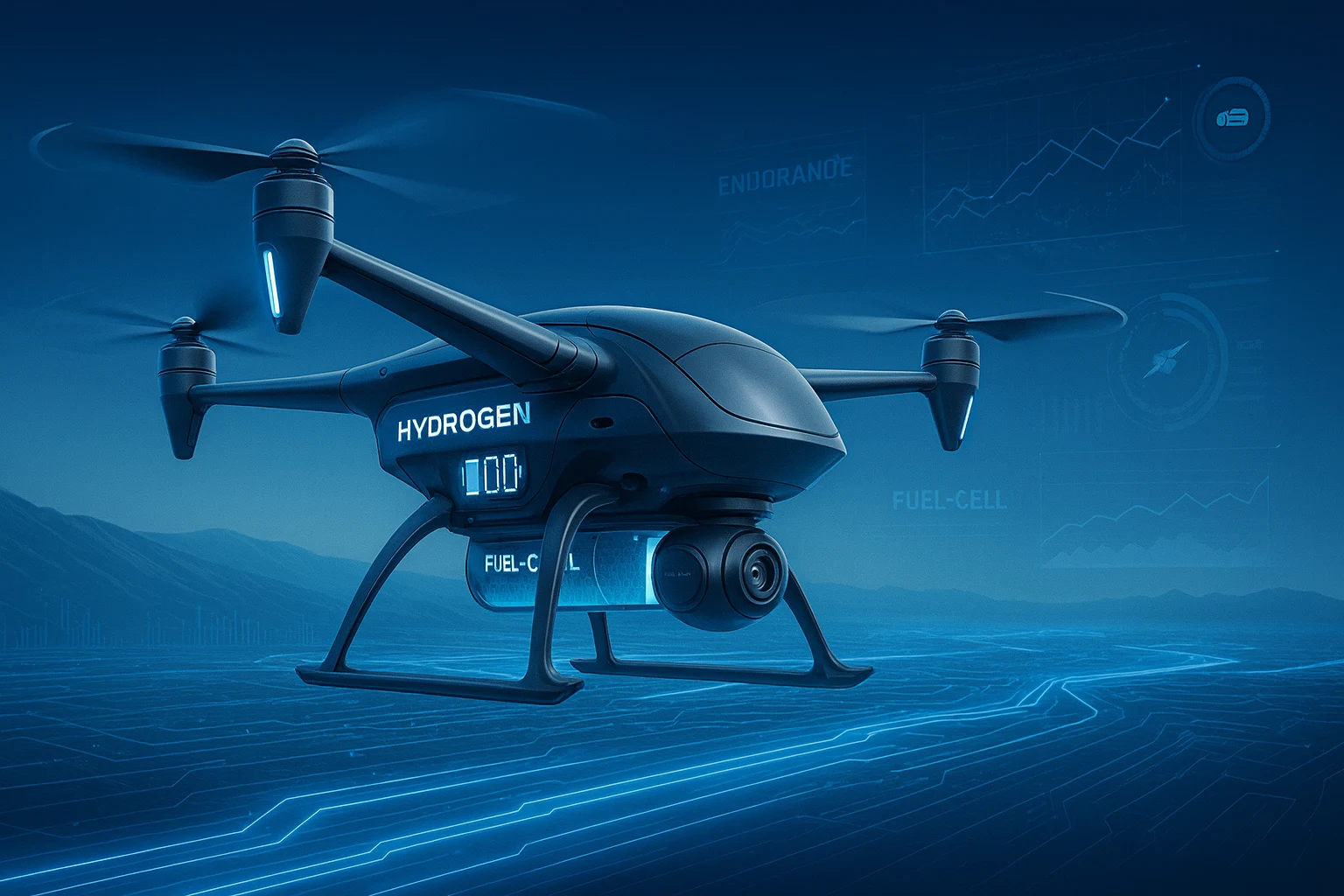
Skycorp Technologies has introduced a new generation of hydrogen-powered drones built to significantly extend mission duration for defense and advanced industrial operations. Unlike traditional battery-based UAVs, which are limited by short flight times, hydrogen drones can operate much longer, making them ideal for demanding missions in surveillance, security, mapping, and search-and-rescue.
This marks a major technological leap in drone aviation, where endurance has long been the biggest limitation.
Why Hydrogen? The Technology Behind the Breakthrough
Hydrogen fuel cells offer a powerful combination of longer energy supply, lighter weight, and cleaner operation. Skycorp’s new UAV systems take advantage of:
• High energy density of hydrogen
• Quick refueling capability
• Zero-emission operation
• Lower operational noise
• More stable power output compared to batteries
This results in drones that can remain airborne for multiple hours — far beyond the typical 20–40 minutes of conventional electric drones.
Defense and Security: The Primary Beneficiaries
Hydrogen drones are particularly well-suited for defense operations, which require:
• Long-duration aerial surveillance
• Border monitoring
• Situational awareness in remote areas
• Covert intelligence gathering
• Persistent overwatch for military units
With extended mission times, defense teams can deploy fewer drones to cover larger areas, improving efficiency and reducing operational complexity.
Industrial Applications Expanding Rapidly
Beyond defense, hydrogen UAVs are attracting increasing attention from industries such as:
• Oil & gas pipeline inspection
• Powerline and infrastructure monitoring
• Environmental research
• Disaster response
• Aerial mapping and surveying
• Maritime patrol and fisheries management
These operations often occur in remote locations where recharging batteries is impractical — making hydrogen ideal.
A Sustainable Shift in Drone Aviation
The adoption of hydrogen technology supports global goals around sustainability and clean energy. Compared to fossil-fuel-powered drones, hydrogen-powered UAVs emit zero carbon, making them an eco-friendly alternative for both government and commercial users.
This aligns with a growing international push for green aviation and reduced-carbon defense technologies.
Challenges Ahead
Despite its advantages, hydrogen drone technology faces several hurdles:
• High cost of hydrogen storage systems
• Limited hydrogen refueling infrastructure
• Safety protocols for hydrogen handling
• Regulatory approval for fuel-cell aircraft
However, as energy infrastructure expands and the commercial drone market matures, these barriers are expected to decrease significantly.
Future Outlook: The Era of Ultra-Long Flight Drones
Industry experts predict that by 2026 and beyond:
• Hydrogen drones will see wider adoption in defense and industrial sectors
• Hybrid hydrogen-electric systems will allow even longer missions
• Improved fuel-cell efficiency will reduce weight further
• Hydrogen drones could become the standard for long-range UAV operations
Skycorp Technologies’ latest advancements are paving the way for a new era where drones can stay airborne for hours — or even days — without relying on ground-based recharging.
Conclusion
Hydrogen-powered drones are pushing the boundaries of flight endurance, offering a transformative solution for defense, industry, and environmental operations. With the ability to fly longer, cleaner, and more efficiently, these UAVs represent one of the most promising innovations in the drone technology landscape.
Skycorp’s latest breakthrough demonstrates a future where mission duration is no longer a limitation — and where hydrogen becomes a key player in next-generation aviation.